

As part of an extensive power plant modernisation project, we were commissioned some time ago to develop and optimise a new Kaplan runner for a hydroelectric power plant in Angola. The power plant, which went into operation in 1959, is equipped with three Kaplan turbines. The nominal data of the power plant are summarised as follows:


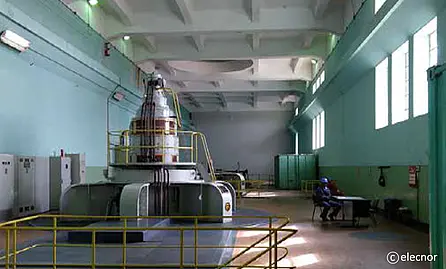
CFD techniques were used to simulate the hydraulic behaviour, which corresponds to the specifications of the new recommended hydraulic geometry and turbine speed for the existing hydropower plant.
The numerical simulation by CFD is based on experience gained from real model tests in accordance with IEC 60193.
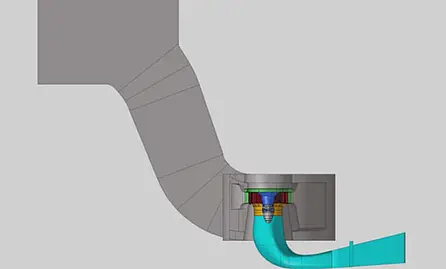
The entire system, including the geometry of the spiral, the guide vanes, the runner shroud and the draft tube (consisting of the draft tube cone, elbow and horizontal diffuser), was reproduced in a 3D model based on the existing geometries.
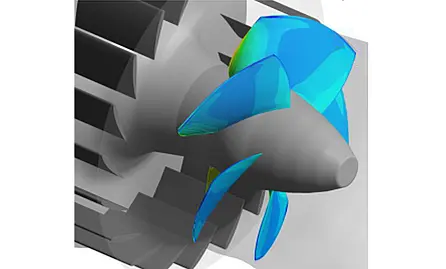
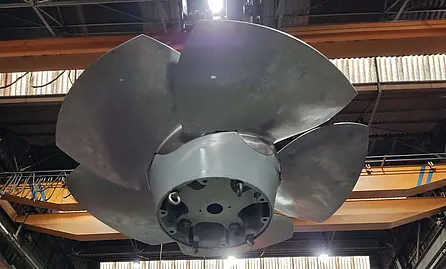
For the development of the new runner blade geometry, three different basic designs were analysed in terms of their efficiency and cavitation behaviour.
The designs were based on turbine designs we had created with similar rotational speed. The final design of the runner blade is ultimately the result of a series of tests and optimisations.
With the help of additional simulations at H=21.5 m and H=17.5 m, a turbine hill chart was created, which was also used to determine the ideal combination of guide vane and runner blade position. Ultimately, a peak efficiency of at least 94% was achieved.
The turbines have now been operating successfully for several years, enabling a sustainable, stable electricity supply in the West African country.
Curious about the details? In our blog post, we explore the topic in greater depth and provide further insights.

Stay informed about our
